Key takeaways
- Start your day with mindfulness to set a calm tone.
- Journaling helps clear your mind and manage thoughts.
- Simple exercises like walks or yoga can significantly reduce anxiety.
Anxiety often feels like a persistent background noise that just won’t quiet down. It can spring from anywhere—tight deadlines, talking in front of people, or even from your phone buzzing non-stop.
Common, yes – but hardly welcome.
Anxiety can make even the simplest tasks feel impossible. It has a knack for turning routine activities into uphill battles.
However, while anxiety can make life a bit tougher, it doesn’t have to be the boss of you.
By adopting certain daily habits, you can create a more livable, manageable day-to-day experience. We’re talking about small, intentional things that don’t ask much of you but can help keep your anxiety in check.
Why does this matter?
Because when life throws a curveball, these habits are your subtle armour. They’re your way of telling anxiety, “Hey, I’ve got this.”
So, why not start small? These tiny changes can make a huge difference in feeling calmer.
Habit 1 – start your day with mindfulness
Mindfulness is all about living in the moment.
It’s the practice of focusing fully on what’s happening, what you’re doing, and the space you’re moving in.
This might sound straightforward — but it often isn’t, especially when your thoughts are clouded by anxiety and panic.
By training your mind to be present, mindfulness can help quiet those noisy thoughts, especially in the morning when they can be most overwhelming.
Simple mindfulness exercises
Starting your day with mindfulness doesn’t require an hour of meditation or total silence, which might be unrealistic for many.
Here are a couple of straightforward exercises that can fit into any morning routine, helping set a calm tone for the day:
- Deep breathing
Before you get out of bed, take a few minutes to focus on your breathing and relaxation. Inhale slowly, feeling your chest and belly rise. Then, exhale gradually, sensing the tension leaving your body. It’s like hitting a reset button on your nervous system. - Guided meditation
Use a meditation app and spend five minutes with a guided session. The voice guiding you can help manage the whirlwind of morning thoughts and anchor you in a calm start. There are tonnes of options out there. Pick one that sounds good to you and give it a try. - Mindful observation
As you have your breakfast, savour the moment. Notice how warm your coffee is, how it tastes and smells, and even how the plate feels in your hands. This focus on sensory details brings you into the present, away from anxiety’s grasp.
Habit 2 – journal your thoughts

Writing things down can be powerful to manage your anxiety.
Sometimes, the simple act of putting your thoughts on paper can act as a release.
Journaling helps declutter your mind. It lets you set your fears and worries on paper, instead of letting them swirl in your head. It’s like having a conversation with yourself and sorting through your emotions.
This can transform a big tangled mess into tangible words that are often easier to understand and manage.
Tips to start journaling
Getting started with journaling doesn’t have to be daunting.
Here are a few tips to make it part of your routine:
- Time it right
Start with just five minutes a day. You can do it first thing in the morning to set a calm tone for your day. It can also happen before you tuck in at night, to unload thoughts before bed. Find a time that fits your schedule. - Use prompts
If staring at a blank page feels overwhelming, use prompts to guide your writing. Start with questions like, “What am I feeling right now?” or “What’s one good thing that happened today?” These can help steer your thoughts and make the process easier. - Keep it private
Remember, your journal is for your eyes only. This is your safe space to express anything and everything without judgement. Keeping it private can free you from holding back, making sure you get the most out of your journaling.
Habit 3 – get moving with stress-free exercise

Physical activity is a proven stress reliever.
When you exercise, your body releases endorphins—these are basically happy chemicals in the brain that act as natural painkillers and mood boosters.
Beyond the biochemical effects, exercise also helps by taking your mind off your worries.
It’s a natural and effective way to combat anxiety because it reduces levels of the body’s stress hormones, such as adrenaline and cortisol.
Simple ways to incorporate exercise
You don’t need to become a gym rat to enjoy the anxiety-busting benefits of exercise.
Here are some straightforward ways to sneak it into your day to help manage anxiety:
- Take short walks
Begin with short, 10-minute walks around your neighbourhood or park. These brief bursts of activity can significantly boost your mood and clear your mind. - Try Out Yoga
Yoga combines physical poses with breathing exercises and meditation. This makes it an excellent activity for stress reduction. Start with simple poses and sessions as short as 15 minutes. There are online tutorials and apps you can check out. - Stretch It Out
If you’re not up for intense workouts, try stretching. It’s gentle on the body and it can be done anywhere. A simple routine is particularly effective in the morning or before bed to help release the physical tension associated with anxiety.
Habit 4 – create a routine
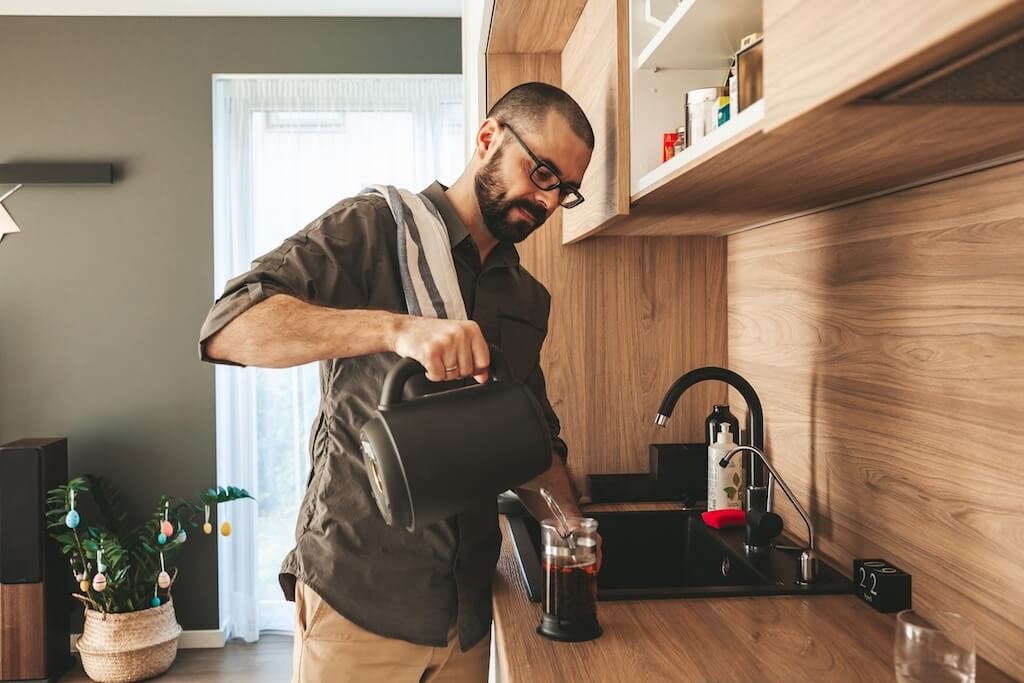
A predictable routine can help lessen anxiety by reducing the number of decisions you make throughout the day.
You’ve probably heard of “decision fatigue”. Basically, the more decisions you make throughout the day, the worse your choices become.
And guess what can trigger anxiety? Yes, too many decisions.
By establishing a routine, you take a bunch of those decisions off your plate. This helps conserve your mental energy and keep stress levels low.
Plus, a routine provides structure to your day and creates a sense of normalcy and security, which can be comforting if you’re feeling anxious.
Building your routine
Creating a calming routine, whether in the morning to start your day right or in the evening to wind down, can be a great buffer against anxiety.
Here are some tips to get you started:
Morning Routine
- Wake up at the same time every day
This helps regulate your body’s clock and can improve your sleep quality and mood. - Include mindfulness or meditation
Just five minutes can set a peaceful tone for the day. - Prepare the night before
Lay out your clothes, prepare breakfast ingredients, or pack your bag to minimise morning decisions.
Bedtime Routine
- Disconnect from digital devices
Turn off digital devices at least an hour before bed to reduce blue light exposure, which can interfere with achieving enough sleep. - Read or listen to calming music
Do something calming before bed to signal it’s time to rest. - Reflect
Spend a few minutes journaling or planning for the next day. This eases any nagging thoughts that might disrupt sleep.
Extra support is always within reach

Feeling overwhelmed by anxiety is a common experience, but when it starts to disrupt your daily life, it’s important to seek professional help.
There is nothing wrong with needing support.
In fact, acknowledging the need for assistance is a positive step towards better mental health.
Reach out to trained therapists and counsellors. They’re trained professionals who can give you effective strategies for managing anxiety disorder. They can also offer support and techniques beyond what self-help measures can achieve.
Resources and support systems
Finding the right help is important in effectively managing anxiety.
Here are some resources and steps you can take:
- Consult your GP
Your general practitioner (GP) is a great starting point. They can assess your situation and may refer you to mental health specialists. - Engage with the NDIS
Do you have a long-term disability or mental health condition that makes daily life difficult? The National Disability Insurance Scheme (NDIS) can help. They offer support services like psychological help and can guide you through your options for managing your condition. - Online therapy platforms
Websites and organisations offer online therapy services and mental health resources tailored for Australians, allowing access to therapy from home. - Local support groups
Search for local anxiety support groups. These groups provide a platform to share experiences and coping strategies in a supportive environment. - National mental health charities
Organisations such as Lifeline Australia and the Black Dog Institute provide resources for managing anxiety, including guidance on finding professional help and accessing immediate support through helplines.
If you have an NDIS plan, you might be able to get some help covering the costs of therapy or counselling. Your NDIS coordinator can help you explore these options and find a provider that works for you.
Winning over anxiety with simple daily habits
Remember, every little step counts. Even the tiniest change is a move towards greater control over your anxiety.
You have the power to make changes in how you manage stress and anxiety through these practical and straightforward daily routines.
Give them a try, and see how they can bring about positive changes in your life. After all, you deserve it.