Autism can be a difficult word for many parents to hear. It’s normal to have a million questions swirling in your head. What does it mean for my child? How do we find out if our child has autism?
First, take a deep breath. By looking for information, you’re already taking the first step towards supporting your child.
Autism, or Autism Spectrum Disorder (ASD), is a developmental condition that affects how a person communicates and interacts with others. It’s called a “spectrum” because it shows up differently in each person.
Knowing how it is diagnosed makes the process less worrisome. It helps you navigate the process confidently and makes sure your child gets the support they need early on.
Diagnosing autism involves observing behaviours, understanding your child’s development, and sometimes doing specific tests.
In this article, you’ll find answers to the five most frequently asked questions about how autism is diagnosed. Whether you’re just starting this journey or are in the middle of it, this blog will help you find the answers you need.
#1 – What are the early signs of autism?
Spotting the early signs of autism can be challenging. As a parent, you know your child best, and noticing differences in their development can be worrying.
However, identifying these signs early can make a difference in getting the right support.
Here are a few common early signs in toddlers and young children:
- Delayed speech or language skills – some children might not start talking as early as their peers. Others might lose words they previously knew.
- Limited eye contact – children with autism might avoid making eye contact or seem uninterested in interacting with others
- Repetitive behaviours – this can include repetitive movements like hand-flapping, rocking, or lining up toys in a specific order.
- Intense focus on specific interests – they might show an unusual interest in particular objects or topics.
- Difficulty with social interactions – this includes not responding to their name, not pointing at objects to show interest, or not playing “pretend” games.
- Sensory sensitivities – some children may be extra sensitive to lights, sounds, textures, or strong smells.
It’s important to remember that autism is a spectrum. This means the signs and their severity can vary widely from one child to another. Each child is unique, and knowing their specific needs is key.
Early signs of autism can be subtle, but keeping an eye out for these behaviours and talking to a healthcare professional if you have concerns can make a big difference.
It can help them develop social, communication, and learning skills. The earlier the support starts, the better.
#2 – Who can diagnose autism?
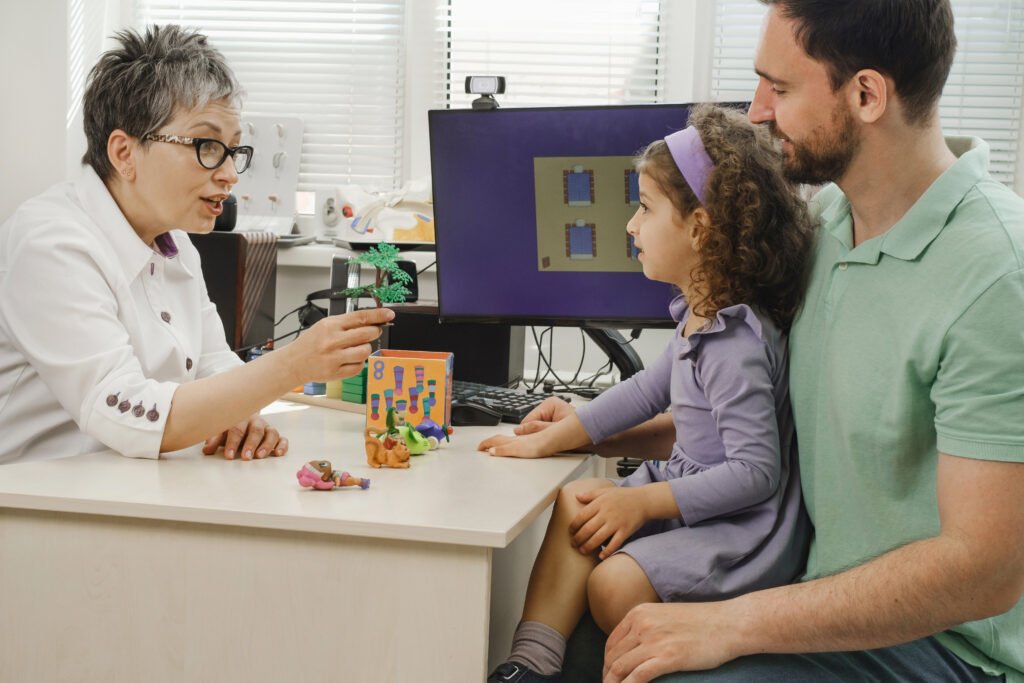
When it comes to your child, you want an expert you can trust. Various specialists can diagnose autism, and knowing who to turn to can make the process smoother.
- Paediatricians – often, the journey starts with your child’s paediatrician. They can observe early signs and refer you to specialists.
- Child Psychologists and Psychiatrists – these professionals are trained in diagnosing developmental disorders, including autism. They use specific tools and tests to assess your child.
- Developmental Paediatricians – these are paediatricians with additional training in developmental and behavioural issues. They focus on diagnosing and managing developmental disorders.
- Neurologists – sometimes, a neurologist might be involved to rule out other conditions and contribute to a comprehensive diagnosis.
These healthcare experts have the training and experience to accurately assess your child’s development. An accurate diagnosis helps make sure that your child gets the right kind of support and interventions.
In many cases, a multidisciplinary team approach is used. This team might include:
- Speech-language pathologists to evaluate communication skills
- Occupational therapists to assess motor skills and sensory processing
- Behavioural therapists to understand behavioural patterns and challenges
Having a team helps make sure that all aspects of your child’s behaviour and development are considered. This collaborative approach leads to a more accurate diagnosis and a personalised support plan.
#3 – What are the diagnostic criteria for autism?

Learning the criteria for diagnosing autism can seem like a big task, but let’s break it down together. The guidelines come from the DSM-5, a manual that helps doctors diagnose mental and developmental disorders.
The DSM-5 outlines two main areas for diagnosing autism:
- Social communication and interaction – children with autism may find social interactions and communication challenging. This might include:
- Difficulty having back-and-forth conversations
- Limited use of nonverbal communication, like eye contact or gestures
- Trouble understanding relationships and social cues
- –Restricted and repetitive behaviours – this can include:
- Repetitive movements or speech and language patterns, like hand-flapping or repeating phrases
- Strict routines or rituals that are hard to change
- Intense focus on specific interests
- Unusual reactions to sensory input, such as being overly sensitive to sounds or textures
These criteria guide professionals in observing specific behaviours and challenges. Accuracy is important for getting the right support and interventions for your child.
Nevertheless, think of these criteria more like a set of guidelines, not a rigid checklist. Doctors use it to observe behaviours and interactions. They are not labels or limitations. Every child with autism is unique, and these guidelines help tailor the best possible care for them.
#4 – What tests are used to diagnose autism?

When it comes to diagnosing autism, several tests and assessments are used to get a clear picture.
- Autism Diagnostic Observation Schedule (ADOS)
- ADOS is a play-based assessment. A specialist interacts with your child through various activities. They observe how your child communicates, interacts, and behaves.
- It helps identify behaviours that are typical in children with autism. The activities are designed to elicit specific responses that highlight strengths and challenges.
- Autism Diagnostic Interview-Revised (ADI-R)
- ADI-R is a structured interview conducted with parents. It covers early childhood development, communication, social interactions, and behaviour patterns.
- Your insights as a parent are important. This interview helps gather detailed information about your child’s family history and behaviours.
Specialists watch how your child interacts in different settings. This might include how they play, how they respond to others, and how they handle changes in routine. These observations help understand your child’s unique behaviours and challenges.
Likewise, your perspective as a parent is invaluable. After all, you know your child best. Interviews with parents provide detailed background information and provide insights into behaviours that might not be seen during a single observation.
At the end of the day, diagnosing autism isn’t about a single test. It’s a comprehensive process that combines various assessments. Each test and observation adds a piece to the puzzle.
#5 – What should I do if I suspect my child has autism?
Suspecting that your child might have autism is a difficult realisation to have. But remember, you’re not alone, and there are clear steps you can take to support your child.
- Observe and take notes
Start by writing down specific behaviours that concern you. Take note of when they happen and in what context. This will be helpful when you are ready to seek out a doctor. - Talk to your paediatrician
Your first point of contact should be your child’s paediatrician. Share your observations and concerns. Paediatricians can provide initial screenings and refer you to specialists. - Seek a specialist’s evaluation
Ask for a referral to a specialist such as a developmental paediatrician, psychologist, or neurologist. They have the expertise to conduct thorough evaluations. - Get a comprehensive assessment
The specialist will likely use a combination of observations, parent interviews, and specific tests (like ADOS and ADI-R) to diagnose. - Consider early intervention
If your child is diagnosed with autism, early intervention is important. Programs like speech therapy, occupational therapy, and behavioural therapy can make a difference in your child’s development.
Your paediatrician is your partner in this journey. They can guide you through the initial steps, provide referrals, and support you in finding the right specialists. Talking to your paediatrician early on can make a big difference in getting your child the help they need.
Here’s the important thing: you’re doing the right thing by seeking information and help. Trust your instincts, reach out to professionals, and know that early support can make a world of difference for your child.
A hopeful path forward – understanding autism diagnosis
Autism is a way of experiencing the world that might be different, but it’s definitely not something bad.
You’re already making the right choice by seeking information and taking steps to understand your child better. Remember, early diagnosis and intervention can open up a world of support and opportunities for your child.
You’re not alone on this journey. With the right resources and a caring community, your child can thrive even with a diagnosis of autism. So take a deep breath, hold onto that hope, and keep moving forward with confidence.